
Its prompted me to reflect on how connection has been a strong throughline in the work the Committee for Greater Hobart has been doing since its formation 2.5 years ago, but particularly recently with our sharpened focus on unlocking and amplifying vibrancy and renewal.
This conversation is especially important in this moment.
The last few years have been difficult for our community, globally the horrors of Ukraine, Gaza and what Canadian Prime Minister Mark Carney calls a “rupture, not a transition” to the world order 1. The horror of events at Bondi, the divisive use of the Voice process, the horrifying images of the activities of ICE in Minneapolis egged on by President Trump’s Deputy Chief of Staff Stephen Miller 2
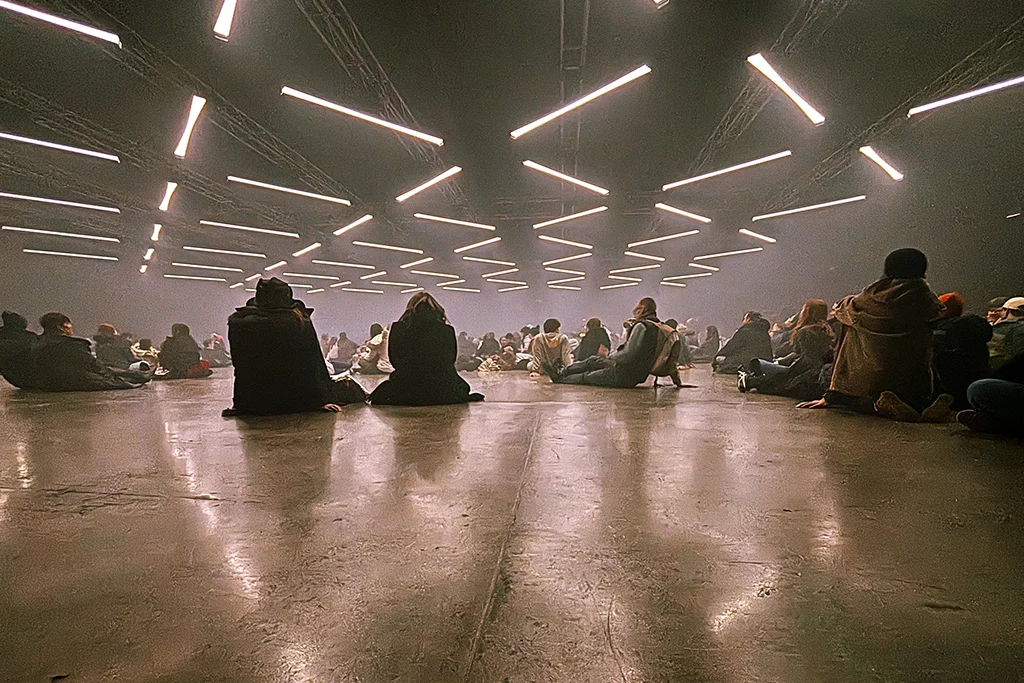
And here 2025 was a hard year with politics and division and echoing through our community and around kitchen tables.
In this moment when public debate feels fractured and the pressures on our community feels relentless, it’s tempting to treat “connection” as a soft concept: something to be addressed after the “real” work of infrastructure, housing and productivity is done. That would be a mistake.
Connection is how places work. It’s how regions grow. It’s how communities stay resilient when the shocks arrive, and as the past few years have demonstrated – they always do.
When we talk about connection, we’re not just talking about transport (though that matters!!). We’re talking about how people connect to opportunity, to each other, to culture, to work, and to place. We’re talking about whether a young person in Bridgewater feels this place is for them. Whether a new arrival can find belonging and our community becomes truly friendly AND welcoming 3. Whether an older resident can age with dignity without becoming isolated. Whether a person living with disability can find opportunity. Whether ideas, talent and capital can circulate easily enough to lift productivity for everyone.
This is the real “place” challenge of our time.
Greater Hobart and other urban places are often framed through a tired binary: city versus region. But the lived reality is far more interconnected. Our supply chains, housing market, labour force, education pathways, creative economy and health system all operate across regional boundaries 4. When one part frays, the whole fabric weakens. One only needs to see the research emerging from the US of the division driven by the “urban/regional” narrative 5.
Strong connection reframes this narrative. Instead of competition, it invites cooperation and partnership and instead of zero-sum thinking, it encourages shared purpose. Regions thrive when their cities are open, accessible and welcoming. Cities thrive when they are anchored in strong regional relationships across economic, education, cultural and social dimensions.
A connected Greater Hobart is one where people can move easily across the urban area, where services align rather than duplicate, and where policy is designed around real journey and the lived experience of community for work, study, care, and participation rather than bureaucratic silos or lines drawn on maps.
Recently I was invited by GHD to the Australian Institute of Transport Planners. I was very grateful for the opportunity, but on reflection the last person they needed to hear from was a privileged middle aged white man from inner Hobart. Our great friends from the Brighton Youth Action Group were the perfect voices for this group to hear from regarding the real lived experience and challenges of community isolated from opportunity. One spoke about the fact that they don’t go to school on Fridays as there is no bus.
We need to be better giving agency and opportunity to the voices that matter and welcome the challenging conversations.
There is a persistent myth that inclusion and social cohesion are moral issues best left to social policy, while productivity is the domain of economists and planners. This is often reinforced by bureaucratic and political silo-isation of policy, programs, and portfolios.
Connection and social capital concepts have been central to discussions about wellbeing, health and cohesion for community for decades, no more so than by Robert Putnam in his 2000 book Bowling Alone 6.
Through this lens and the work that has been inspired by this thinking in the decades since, we now know even more than before that social capital, inclusion, cohesion and economy are inseparable 7. Social cohesion is not social policy, its infrastructure policy, and we need to invest in it over the long term.
Disconnected communities are expensive. They generate higher health costs, lower workforce participation, weaker educational outcomes and lost human potential. Inclusive, connected places do the opposite: they unlock participation.
Cultural, generational, socioeconomic diversity is not just something to tolerate. It is a source of creativity, innovation and resilience. Places that make room for difference are better at adapting. They produce more ideas, stronger networks and deeper civic trust.
For Greater Hobart, this means designing neighbourhoods that mix housing types and price points. It means public spaces that feel safe and welcoming 24/7. It means investing in cultural and creative infrastructure that build the scaffolding for who we are now and where we want to be, not just who we were, and it means decision-making that include voices too often left outside the room.
If productivity is about how efficiently we turn effort into value, then connection is its quiet enabler.
When people can live closer to work, productivity rises. When transport systems are legible and reliable, productivity rises. When creative workers, entrepreneurs, researchers and manufacturers connect (physically or digitally) productivity rises.
Disconnected systems create friction. They slow approvals, inflate costs, fragment labour markets and exhaust people. Connected systems reduce friction and create certainty, build trust and make collaboration easier.
For a small region like Greater Hobart, this matters even more. We don’t have scale on our side, so we need flow. We need ideas, skills and capital to move smoothly across the system. That is how smaller places punch above their weight.
This is particularly important when we look at this through the lens of creating great spaces to thrive that are denser and more connected. Last year Andrew Leigh MP, closed our Committee for Capital Cities event in Canberra 8. He cited a wide range of evidence showing the importance of connection to productivity, prosperity, participation and resilience.
One example was a “global meta‑analysis of nearly 300 studies finds that when city density doubles, productivity typically rises by between 1 and a half and 4 per cent, with an average estimate around 2 and a half. The evidence is strikingly consistent: denser cities are more productive cities. Density allows workers and firms to specialise, share infrastructure and innovate faster.” 9
The future of Greater Hobart won’t be decided by a single project or policy. It will be shaped by the cumulative effect of everyday decisions: where we invest, who we listen to, how we design, and whether we see connection as core business or an afterthought.
If we want a city-region that is productive, inclusive and resilient, connection must be treated as strategy not sentiment.
That means planning for people, not just parcels of land. It means measuring success in participation and wellbeing, not only dollars spent. We need to tell a new story about Greater Hobart: not as a collection of competing parts, but as a connected place with a shared future. As we’ve seen over and over again, places don’t succeed by accident. They succeed with long term effort and investment driven by connection.
Connection doesn’t happen in isolation, it happens where people overlap.
That means:
Connection breaks down fast when moving around is difficult and exhausting.
This isn’t just about more infrastructure, it’s about coherence built by understanding experience:
When movement is hard, opportunity shrinks. When it’s easy, participation expands.
Culture and creativity could be one of Greater Hobart’s quiet superpowers.
But culture isn’t just festivals or flagship events. It’s:
Culture creates shared experiences, place and identity, and shared experiences create belonging faster than any policy document ever will. It’s critical scaffolding and infrastructure for our community.
Disconnection is often bureaucratic, not physical.
Connection grows when:
You don’t build connection by inviting people in at the end. You build it by starting with them.
That means:
Belonging isn’t automatic. It has to be actively created and protected.
Connectors of place are the organisations, venues and people who quietly stitch the place together: Social enterprises, sporting clubs, music venues, libraries, neighbourhood houses, festivals, volunteers.
They are not “nice extras”. They are place infrastructure. If we want stronger connection, we need to fund, protect and scale the things that already do it well.
Connection is also narrative. When people see themselves in the story of a place, they invest in it emotionally, socially and economically.
Greater Hobart needs a story that says:
Cam Crawford is Chief Executive of the Committee for Greater Hobart
3. See further https://committeeforgreaterhobart.com.au/posts/friendly-and-welcoming
4. See also 2017 Productivity Commission work on Transitioning Regional Economies, prepared with the backdrop of the resources investment boom, explores the “functional regions” models, https://www.pc.gov.au/inquiries-and-research/transitioning-regions/report/. See also wide range of research and writing on “left behind places” eg. Stefania Fiorentino, Amy K Glasmeier, Linda Lobao, Ron Martin, Peter Tyler, ‘Left behind places’: what are they and why do they matter?, Cambridge Journal of Regions, Economy and Society, Volume 17, Issue 1, March 2024, Pages 1–16, https://doi.org/10.1093/cjres/rsad044
5. See further Rebuilding the relationships between cities and regions October 2025, particularly prompted by Mettler and Brown’s Rural versus Cities charting of the US divide. https://committeeforgreaterhobart.com.au/posts/cities-and-regions
6. Putnam, Robert D. Bowling Alone: The Collapse and Revival of American Community. Simon & Schuster, 2000.
7. For example Putnam recently said at the Dartmouth-United Nations Development Program Symposium that the “best individual-level predictor or aggregate-level predictor of Trump’s electoral support best by far is whether people are socially isolated or not.” Crucially, he stressed that Trump is merely a symptom, not the cause, of this crisis. The “real danger is that the problem which caused Trump is getting worse,” and until the underlying issue of social isolation is fixed, the country will “keep getting Trumps.” From https://fortune.com/2025/11/06/robert-putnam-gen-z-trump-social-capital-respect-economy/ This was reinforced by Trump insider Steve Bannon in his interview in 2024 with David Brooks in the New York Times.
9. ibid referencing Donovan S et al. (2022) Unravelling urban advantages: A meta‑analysis of agglomeration economies, Journal of Economic Surveys, 38(1):168–200