
On 17 November last year, Trish Hodge launched her extraordinary book Palawa tunapri: Knowledge of Our Ancestors.
The launch was held in a packed school hall, with people squeezed into every corner of the room. Published by one of Hobart’s great institutions, Fullers Bookshop, the first print run sold out almost immediately.
But Palawa tunapri is much more than a book. It is a celebration of language, history, connection and place: an extraordinary gift to Tasmania, and to the world. It brings together knowledge built over more than 60,000 years of cultural understanding of plants, landscape and Country.
That moment: a community gathered in a school hall to celebrate knowledge, culture and story says something important about this place.
Places are shaped not only by their landscapes, buildings and infrastructure, but by the stories they tell about themselves.
Hobart has recently been recognised as a UNESCO City of Literature. It’s a title we should be proud of, but it also raises a more difficult question: how can we hold that title when nearly half of Tasmanians have low levels of functional literacy? That tension isn’t something to smooth over, it’s something we must confront.
This week’s state budget included a $10 million Creative Industries initiative, alongside dedicated investment in screen industry development.
The Premier described it as bringing Tasmania’s per-capita creative industries funding in line with Western Australia and more than Queensland.
That should be seen as a floor, not a ceiling.
We welcome the announcement. Any investment in creativity signals its important role in community and place and we also want to be honest about what investment in creativity is actually doing, because the case for it is stronger, and more fundamental, than it is usually made.
We often talk about infrastructure in terms of roads, bridges, housing and energy. These things matter enormously. But the cultural life of a place is also infrastructure, and in Hobart, that infrastructure is extraordinarily rich.
Think about what we actually have. The Hedberg is one of the finest performing arts and conservatorium facilities in the country, home to world-class recording facilities. The Tasmanian Symphony Orchestra is globally recognised as one of the best orchestras in the world. MONA’s Frying Pan studio is a recording facility of genuine international calibre.
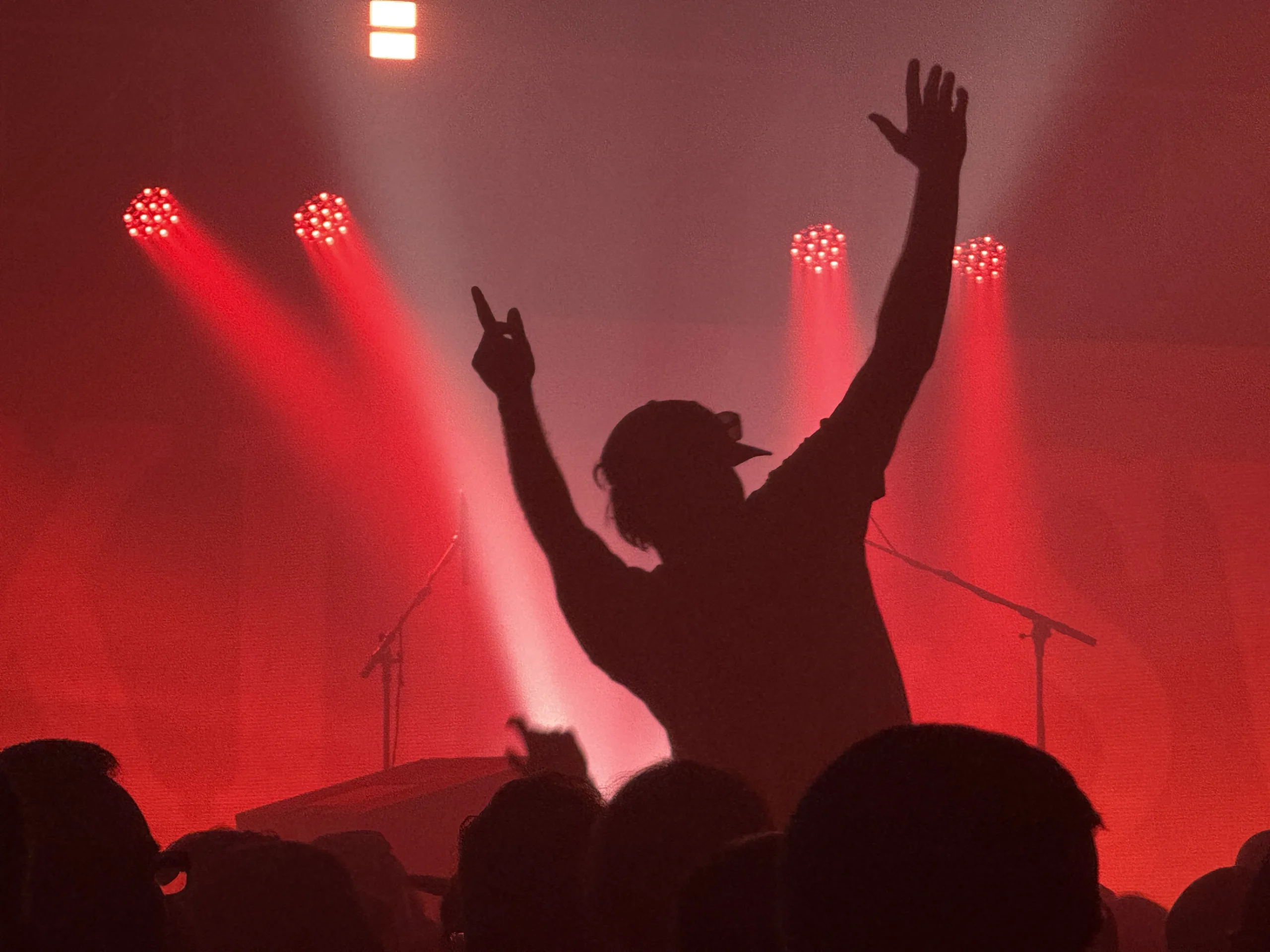
Beyond the institutions, there is a generation of artists doing work that reaches far beyond this island. DENNI, a proud truwulway woman and pakana artist, weaves palawa kani language into electronic hip-hop that is at once deeply Tasmanian and nationally significant. Grace Chia brings raw and charged R&B to stages, Dark Mofo and national audiences. A. Swayze and the Ghosts took garage punk born in a Hobart share house to ARIA nominations and one of the most significant gaming soundtracks in the world. Spooky Eyes have already opened for Foo Fighters and Jack White. What’s happening in Hobart’s live music scene on any given weekend is not a regional footnote. It’s a scene of genuine creative ambition, built from the ground up on very little.
The same is true in literature. Writers such as Meg Bignell, Richard Flanagan, Robbie Arnott, Heather Rose and Favel Parrett have carried stories from this island out into the world, alongside many other voices across fiction, non-fiction, poetry and history shaping how Tasmania understands itself.
Across visual art, screen, design and theatre, this state punches well above its weight. That is the product of decades of investment, public and private, institutional and grassroots, in the people and organisations that make creative life possible.
In larger cities, culture can feel ambient. Hobart doesn’t work like that. Here, culture doesn’t happen by default. It’s built, slowly and deliberately, through the efforts of people, organisations and communities who choose to invest in it.
If we don’t actively sustain those conditions, they don’t persist on their own. If cultural experiences feel distant, inaccessible, or not made for people, they disengage, not because they lack interest, but because there are too few meaningful entry points. We see this most clearly with younger generations, and most acutely in communities where the structural barriers are highest.
The question we always ask about announcements like this is: how is it structured, who does it reach, and does it build lasting capacity, or does it fund a series of one-off moments?
The forward profile of the Creative Industries initiative matters. Investment that ramps up over time is more useful than lump sums that disappear. Organisations need the confidence to plan, hire, and build programs that accumulate over years, not scramble for survival each budget cycle.
It also matters whether the investment reaches the full ecology of creative life, not just the anchor institutions as essential as they are, but the independent musicians, the emerging visual artists, the small labels, the community studios, the festivals and bookshops doing the less visible work of building participation from the ground up.
The budget has taken a step. The test now is whether it’s the beginning of a sustained commitment, or a number that looks good in a press release. We’re optimistic, and we’ll be watching closely.
Cam Crawford is Chief Executive of the Committee for Greater Hobart, and Kate Owen is Founder / Head of Design at Futago