
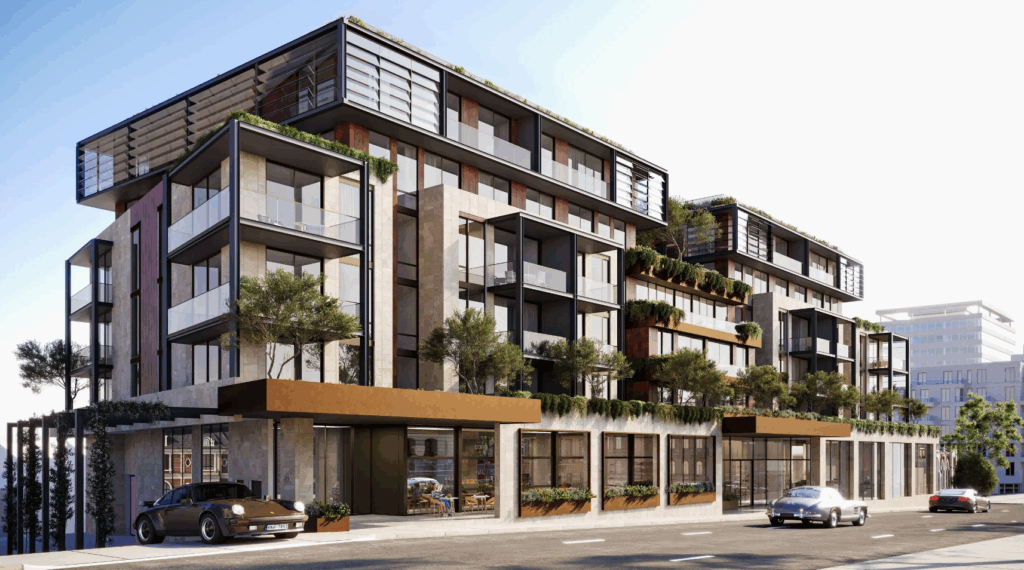
The news that the Macquarie Place development in Hobart has been scrapped was easy to miss among the headlines last week. Some might have assumed it was the usual story of frustration with planning or enabling infrastructure. But not this time.
The project collapsed because the numbers no longer worked. Escalating construction costs tipped it over the edge.
That should give us pause. If a prime city-centre site, with approvals in place and demand for apartments, can’t get off the ground, then what hope do we have of tackling the housing crisis through the kind of infill and renewal projects we desperately need?
The truth is that these projects are hard. And they’re hard not just in Hobart. A recent study in New South Wales laid bare how the rising cost of land, labour, and materials is chewing up the feasibility of projects across the country. Here in Tasmania, the challenges are sharper still: a smaller market, fewer players, higher freight costs. Put simply, it costs more to get things done, and there are fewer people around who can do them.
That matters because infill is not just about housing numbers. It’s about shaping liveable neighbourhoods, making better use of underutilised land, and building the kinds of places where people want to live. Done well, it can turn a carpark into a bustling precinct. Done badly — or not at all — it leaves us with lost opportunities and an even deeper shortage of homes.
The problem is that our current way of approaching this task is not fit for purpose. Too often, the conversation falls back on simplistic slogans: “cut the red tape”, “planning is the problem”, “freeze the building codes.” None of these, on their own, will make a marginal project viable. The reality is more complicated — and that means the solutions must be too.
And every lever should be up for discussion. Which ones can we adjust now? Which need longer-term work? Which could governments or institutions help to de-risk so that private capital, which is sitting on the sidelines, can flow into projects that otherwise wouldn’t stack up?
There are models out there worth studying. In South Australia, Renewal SA has been able to unlock precinct-scale redevelopments by working hand in glove with the state’s housing trust. By taking a more joined-up role — bringing land, infrastructure and partnerships together — they’ve created space for private developers to invest with confidence, while keeping community outcomes at the centre.
Here in Hobart, we should be talking to developers like Nightingale, who have delivered innovative, community-minded projects in other cities but struggle to make the economics work here. We should be talking to our community housing providers, who have a mission-driven lens but are often boxed in by the rules of the game. And we should be talking to landowners who, right now, might see a carpark as their safest bet, but could be persuaded to think differently if the conditions changed.
And then there are the big, once-in-a-generation sites. The old K&D building on Melville Street is one of them. Imagine if that site became the benchmark for what a vibrant, mixed-use precinct could look like in Hobart: housing, public space, street life, and activity all knitted together. Done right, it could show the community what’s possible — and set the tone for the northern corridor and other sites that have been stuck in the “too hard” basket for decades.
Of course, all of this is happening in the context of a tight state budget and a housing crisis biting harder by the month. That makes it even more important to get private capital working for the public good.
The axing of Macquarie Place should be a wake-up call. It reminds us that the real roadblock is not just approvals or community opposition, but the underlying feasibility of getting projects done in this market.
If we want our city to grow in a way that is fair, sustainable and exciting, then we need to embrace the complexity, not shy away from it. That means ditching the sound bites and rolling up our sleeves. It means rethinking the system, pulling the right levers at the right time, and building partnerships that will stand the test of decades.
Cam Crawford is Chief Executive of the Committee for Greater Hobart