
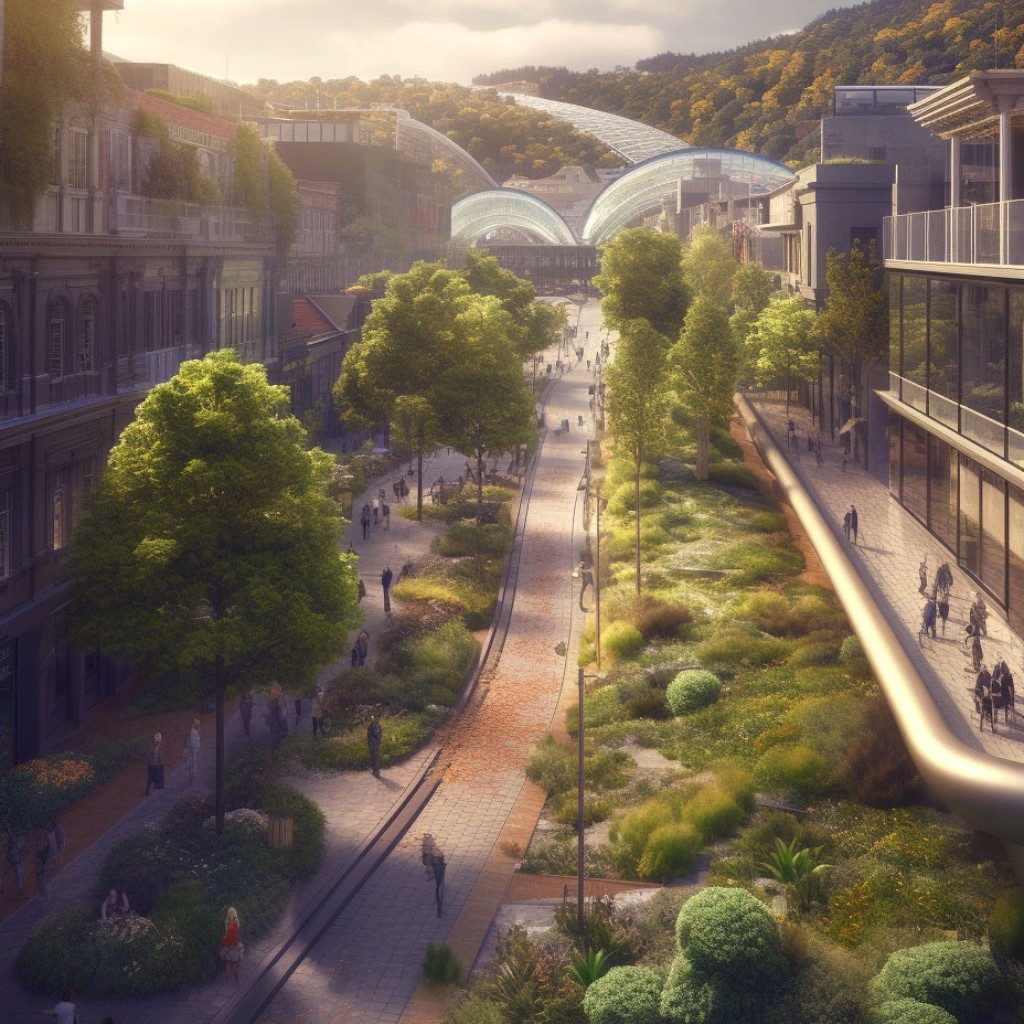
Greater Hobart should be one of the world’s most liveable and loveable places for people to live, learn, work and play.
Fresh air and stunning scenery; deep indigenous heritage; net zero status; proximity to Antarctica; world-class produce and hospitality; moderate seasonal climate; vibrancy and creativity; academic and sporting pride; relative safety; and social connectedness.
All these things bring with them a sense of place and reflect the DNA of a region that has world-class elements that should bring a sense of connection and pride to its people. Yet, beneath the surface, a complex web of challenges threatens to undermine our opportunity to take our place in the world proudly, confidently and sustainably for the benefit of future generations.
These challenges include the need to improve housing accessibility and affordability; provide access to health services in the community; improve educational outcomes and job opportunities (particularly for young people); manage the development and investment in land use and enabling infrastructure; maintain our net zero status; grow our economy; and reduce congestion across the CBD.
So why are these challenges so difficult to address and who is responsible and accountable for addressing them? The reality is it goes beyond council boundaries and the silos of government departments.
For example, housing affordability is a major concern. Hobart’s property prices have skyrocketed in recent years, pushing home ownership further out of reach for many residents. This, coupled with a lack of affordable rental options, creates a squeeze on middle-income earners and young families and an increasing demand for safe, accessible and affordable housing for people on the social housing wait list.

It adds cost to provide infrastructure for water, sewerage, energy and municipal services and can reduce the liveability of areas where councils do not have the funds to create the amenity and green spaces to support growing suburbs.
In some cases, it has also created areas of significant social and economic disadvantage, where people in certain post codes can experience significantly different life expectancy outcomes to other people in the region.
For example, recent research has identified that whilst people in Sandy Bay experience a life expectancy of 86, which is world-class, in the northern suburbs of the city the life expectancy can be as low as 67, which is equivalent of some third world countries.
We need to consider all the options and alternative opportunities that a region like ours can provide, which should include considering more dense and liveable residential areas that are close to city centres and alternative transport opportunities other than private vehicles.
Traffic congestion is another significant liveability issue. Hobart’s road network, unchanged since the mid-20th Century, struggles to cope with the increasing number of private vehicles, alongside commercial heavy vehicles that have no alternative options to transport their cargo from one end of the region to the other. The resulting gridlock not only wastes time but impacts directly on how people experience a city that has been designed for vehicle transport.
Hobart has one of the highest rates of motor vehicle use in the country and there is little impetus for people to change. Encouraging cycling and walking through dedicated lanes and improved pedestrian infrastructure can make these options more attractive, as well as providing people with an option to improve their health and wellbeing, along with reducing strain on the climate.
In addition, a more efficient and affordable public transport system, with better connectivity between suburbs and key destinations, can significantly reduce private vehicle dependence.
Greater Hobart is not alone in these challenges. In cities and regions around the world we see increasing levels of urbanisation driving the need for new ways of solving complex and interconnected problems.
Addressing these problems requires a change in thinking – recognising the interconnectedness of these issues and crafting practical and sustainable solutions that address the underlying causes.
It also requires a collaborative effort between all stakeholders – local, state, and federal governments, industry leaders, community groups and residents.
A regionally focused body that is empowered to develop, plan and deliver agreed and supported solutions, fostering collaboration between the institutions, industries and communities that make up Greater Hobart, is crucial.
This collaborative approach can ensure that Hobart becomes not just a more liveable city, but a truly exceptional one for all of us.

If you are interested in joining us to develop a plan for the future liveability of Greater Hobart, enquire about membership today.
A proper collaboration between local and state government, developed in consultation with the community and administered by a proper independent planning commission will deliver the city we desperately need, writes Complete Streets Director Steven Burgess.

A lack of coordination and oversight of the bigger picture sees us currently stuck in a hiatus, and this needs to change, writes Committee Chair Dr Dan Norton.