
For years, the conversation about place-making in Greater Hobart has focused on what is wrong. Housing is too expensive, development is too difficult, planning takes too long, construction costs are rising and projects struggle to remain viable.
None of that is incorrect. But it is no longer the most useful place to begin.
We know Greater Hobart needs urban renewal. The better question is: what will it take to unlock it? That shift moves us from describing problems to designing solutions. It asks governments, industry, investors and communities not simply why projects fail, but what each of us can do to help them succeed.
Across Greater Hobart, the opportunity is visible: vacant and underutilized sites close to jobs and transport; ageing commercial buildings ready for a new life; and established suburbs with schools, parks and infrastructure already in place.
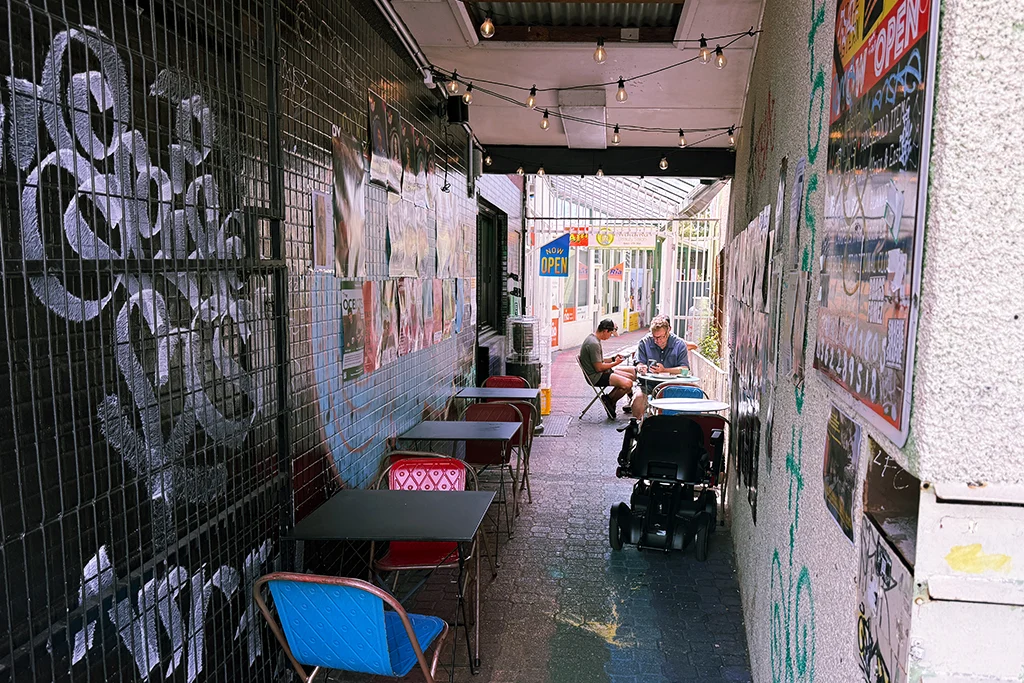
Renewal means making better use of what we already have. It can put more people close to jobs, education and services; give local businesses more customers; make public transport more viable; and reduce the long-term cost of infrastructure.
Housing is one outcome but great places are the objective.
Cities around the world face similar pressures: changing demographics, climate risk, housing affordability and the need to use existing infrastructure efficiently. Auckland has paired renewal with planning and infrastructure reform; Portland has shown the value of walkable mixed-use centres; and Vienna has demonstrated the importance of commitment to great public housing, creativity and open spaces.
The lesson is consistent: successful cities do not simply expand; they renew. But none offers a complete blueprint for Greater Hobart. Our task is to learn from others while creating an approach that reflects our landscape, communities and aspirations.
There is growing agreement across government, industry and the community that renewal is essential. The harder question is why so many projects that make sense for our city never leave the drawing board.
The answer is rarely one obstacle, it is the accumulation of many.
Before construction begins, a project may absorb years of planning costs, consultant fees, financing expenses, infrastructure contributions, taxes, approval delays and rising building costs. Every additional month adds holding costs. Every duplicated process increases uncertainty. Time has become one of development’s most expensive inputs.
This is the cost stack of development. If we want more renewal, we must stop examining each barrier in isolation and ask how the whole system performs.
How can we reduce unnecessary approval time while maintaining good planning? How can investment in transport, water, energy and public infrastructure be coordinated so development is supported rather than delayed? How can we attract private and institutional capital into renewal? And which exemplar sites can show what is possible?
Governments elsewhere are increasingly combining planning reform with infrastructure sequencing, enabling investment, cross-agency coordination and new financing approaches. The focus is shifting from simply regulating development to enabling great community outcomes. Greater Hobart must join that conversation.
Our size should be an advantage to bring governments, infrastructure providers, investors, developers, community organisations and residents around the same table to test new approaches.
Capital must become a bigger part of the discussion. Governments (especially the Tasmanian budget) cannot fund every opportunity. Successful renewal often begins with targeted public investment that lowers risk and gives private capital confidence. Modest investment in enabling infrastructure, public spaces or strategic land assembly can unlock much larger private investment.
That is why the Committee has been exploring a “Renewal Trust”: not as a replacement for the market, but as a bridge between public ambition and private delivery, helping to reduce the risk of projects that offer long-term community benefit.
Nor should renewal be attempted everywhere at once. We should identify a small number of precincts where government, industry, investors and communities can work together. Moonah and the northern corridor already have many ingredients for success. Showing what a great neighbourhood can look like there would build confidence, attract investment and establish a model that could be adapted across Greater Hobart.
Ultimately, renewal is not about buildings. It is about the place we want to become: a region where young people can build their futures; older residents can downsize without leaving their communities; businesses can grow because there is a critical mass of people and activity; and public transport becomes more integrated.
Greater Hobart does not lack ideas or places with extraordinary potential. What it has lacked is a shared commitment to unlock renewal together.
The cities making the greatest progress are not those without challenges. They are those prepared to work across systems rather than within silos, treating renewal as a shared strategy for housing, the economy, transport, productivity and community.
Greater Hobart can write its own chapter, not by becoming a copy of somewhere else, but by becoming the best version of itself. That will require government, industry, investors and communities to work around a shared purpose.
Most of all, it will require us to spend less time asking why we cannot and more time asking what it will take.
Cam Crawford is Chief Executive of the Committee for Greater Hobart
Also published in The Mercury, Friday August 7, 2026.